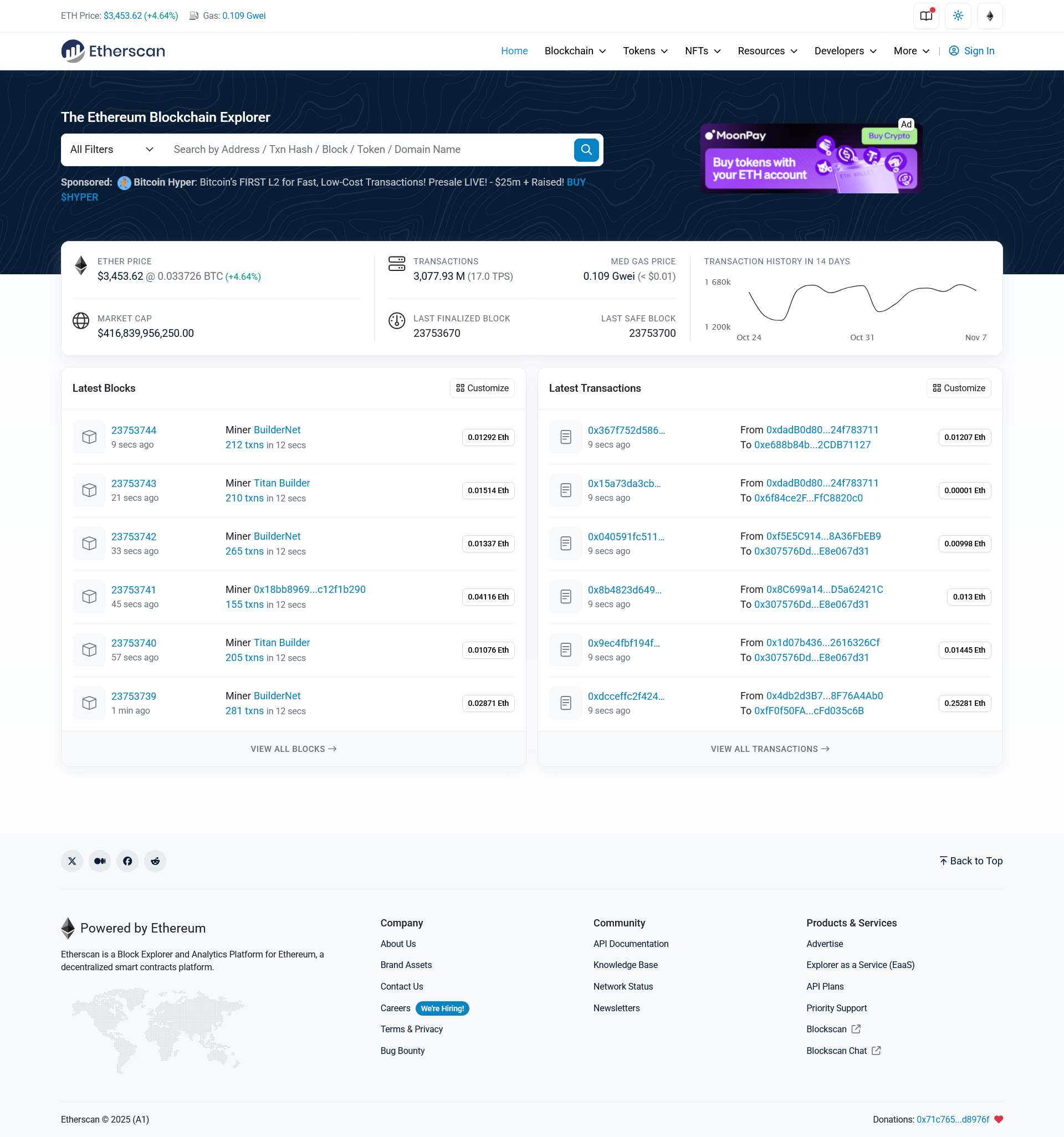
In the rapidly evolving world of blockchain technology, transparency and accessibility are crucial for both developers and users. For Ethereum—the second-largest blockchain by market capitalization—Etherscan has emerged as one of the most indispensable tools. But what exactly is Etherscan, and why has it become such an essential resource in the cryptocurrency ecosystem?
What is Etherscan ?
Etherscan is a blockchain explorer for the Ethereum network. A blockchain explorer is essentially a search engine for blockchain data: it allows users to browse, analyze, and verify transactions, smart contracts, wallet addresses, and more on a blockchain. Launched in 2015 by a team led by Matthew Tan, Etherscan has grown to become the most widely used Ethereum explorer, trusted by millions worldwide.
In simple terms, Etherscan acts as a public ledger interface, providing transparency and trust by allowing anyone to inspect Ethereum transactions in real time.
Key Features of Etherscan
Etherscan offers a suite of tools for both casual users and developers:
1. Transaction Tracking :-
Etherscan allows users to track Ethereum transactions by entering a wallet address, transaction hash, or block number. Users can see details such as transaction status, gas fees, and timestamp. This transparency helps users confirm payments and monitor activity on the blockchain.
2. Wallet and Token Information :-
By searching a wallet address, users can view balances, token holdings, and historical transactions. Etherscan also supports ERC-20, ERC-721 (NFTs), and other token standards, making it invaluable for token management.
3. Smart Contract Verification :-
Developers can publish and verify smart contracts on Etherscan. Verified contracts allow users to interact with decentralized applications (dApps) confidently, knowing that the contract code is transparent and audited.
4. Gas Tracker :-
Ethereum transactions require gas fees, which fluctuate based on network congestion. Etherscan’s gas tracker provides real-time data on recommended gas prices, helping users save money and execute transactions efficiently.
5. Analytics and Charts :-
Etherscan provides a wealth of blockchain statistics, including:
. Ethereum network activity
. Gas fee trends
. Top token holders
. DeFi statistics
These insights are useful for traders, developers, and blockchain analysts.
6. Developer Tools :-
For blockchain developers, Etherscan provides APIs that allow programmatic access to Ethereum data. This is critical for dApps, analytics tools, and portfolio trackers.
Why Etherscan Matters
Blockchain is fundamentally about trustless transactions, but understanding what happens on a blockchain can be complex. Etherscan bridges this gap by offering an intuitive interface to explore Ethereum’s public ledger. Its importance lies in three main aspects:
1. Transparency: Anyone can independently verify transactions, reducing reliance on third-party intermediaries.
2. Security: Users can detect suspicious transactions or scams, increasing confidence in the Ethereum ecosystem.
3. Accessibility: By making blockchain data readable and searchable, Etherscan democratizes access to complex Ethereum data.
Limitations
While Etherscan is powerful, it has some limitations:
. Ethereum-focused: It only supports the Ethereum blockchain and Ethereum-compatible tokens.
. User interface complexity: Beginners may find the detailed transaction data overwhelming.
. Privacy: Blockchain data is public, so while Etherscan shows addresses, it does not reveal the real-world identity behind them.
Conclusion
Etherscan.io has become more than just a blockchain explorer; it is a vital tool for transparency, security, and education in the Ethereum ecosystem. Whether you’re a casual user checking a transaction, a developer auditing a smart contract, or an investor tracking token activity, Etherscan provides the clarity and insight needed to navigate Ethereum confidently.
In an industry where trust is hard-won, Etherscan stands as a beacon of transparency, opening the black box of blockchain for all.

AI Website Creator